

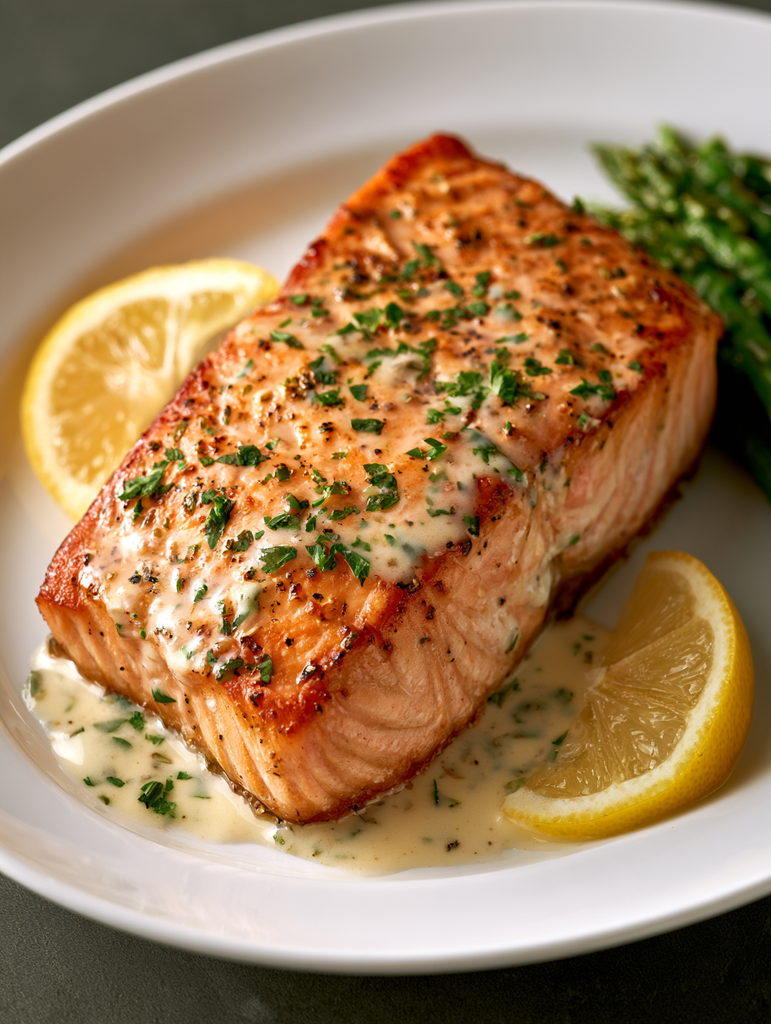
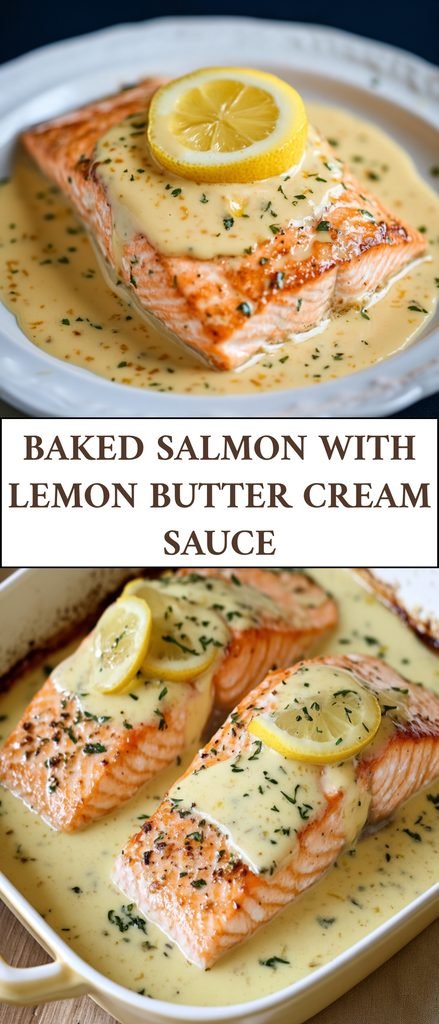
This Baked Salmon with Lemon Butter Cream Sauce is an elegant, restaurant-quality dinner that’s surprisingly easy to make at home. Tender, flaky salmon fillets are baked until perfectly cooked, then topped with a rich, buttery cream sauce infused with fresh lemon juice, lemon zest, and fragrant garlic.
The combination of bright citrus and silky cream creates a delicious balance of flavors that complements the salmon beautifully without overpowering its natural taste. Best of all, this recipe uses simple ingredients and comes together quickly, making it perfect for busy weeknights, date nights, or special family dinners.
Serve it with roasted vegetables, fluffy rice, or creamy mashed potatoes for a satisfying meal that feels extra special.
Why You’ll Love This Baked Salmon Recipe
- Easy to prepare: Simple ingredients and straightforward steps make this recipe approachable for cooks of any skill level.
- Rich and creamy sauce: Butter, heavy cream, garlic, and fresh lemon create a smooth, flavorful sauce.
- Tender, flaky salmon: Baking helps the fish cook evenly while keeping it moist.
- Fresh, balanced flavor: Lemon juice and zest brighten the richness of the cream and butter.
- Perfect for any occasion: It’s elegant enough for entertaining but quick enough for a weeknight dinner.
- Easy to customize: Choose parsley or dill, adjust the lemon to your taste, and pair the salmon with your favorite sides.
Ingredients You’ll Need
Here’s what you need to make baked salmon with lemon butter cream sauce.
For the Salmon
- 4 salmon fillets, 6 ounces each: Fresh or thawed salmon works well. Choose fillets of similar thickness so they cook at approximately the same rate.
- 2 tablespoons olive oil: Helps coat the salmon and adds moisture and flavor.
- 3 garlic cloves, minced: Adds a savory, aromatic flavor that complements the fish and lemon sauce.
- Salt and black pepper: Season the salmon and enhance its natural flavor.
For the Lemon Butter Cream Sauce
- ¼ cup (60 ml) fresh lemon juice: Adds bright, tangy flavor that balances the richness of the butter and cream.
- Zest of 1 lemon: Provides concentrated citrus aroma and extra lemon flavor.
- ½ cup (120 ml) heavy cream: Creates the smooth, creamy base of the sauce.
- ¼ cup (60 g) unsalted butter: Adds richness and gives the sauce its silky texture.
- 2 tablespoons chopped fresh parsley or dill: Adds freshness, color, and a delicious finishing touch.
Fresh lemon juice is especially recommended for this recipe because it gives the sauce a brighter flavor than bottled juice.
Equipment Needed
You’ll need a few basic kitchen tools:
- Baking dish or sheet pan
- Parchment paper or a little oil for greasing
- Paper towels
- Small saucepan
- Whisk
- Knife and cutting board
- Measuring cups and spoons
- Fork or instant-read thermometer
How to Make Baked Salmon with Lemon Butter Cream Sauce
Step 1: Preheat the Oven
Preheat your oven to 375°F (190°C).
Lightly grease a baking dish or line a sheet pan with parchment paper. Choose a dish large enough to hold the four salmon fillets in a single layer without crowding them.
Step 2: Prepare the Salmon
Pat the salmon fillets dry with paper towels. Removing excess moisture helps the olive oil and seasonings coat the fish evenly.
Arrange the fillets in the prepared baking dish. Drizzle with olive oil, then season with salt, black pepper, and half of the minced garlic.
Rub the seasonings gently over the surface so each fillet is evenly coated.
Step 3: Bake the Salmon
Place the baking dish in the preheated oven and bake for approximately 12–15 minutes.
The exact cooking time depends on the thickness of the fillets, so begin checking toward the lower end of the range. The salmon should turn opaque and separate into flakes when gently tested with a fork.
For food safety, cook salmon to an internal temperature of 145°F (63°C) at its thickest point, measured with a food thermometer.
Step 4: Melt the Butter and Cook the Garlic
While the salmon bakes, place a small saucepan over medium heat and melt the unsalted butter.
Add the remaining minced garlic and sauté for about one minute, stirring frequently until fragrant. Avoid browning or burning the garlic, as this can make the sauce taste bitter.
Step 5: Add the Lemon Juice and Zest
Stir in the fresh lemon juice and lemon zest.
Allow the mixture to warm briefly while stirring. The lemon adds brightness and helps balance the richness of the butter and cream.
Step 6: Stir in the Heavy Cream
Reduce the heat to low and slowly whisk in the heavy cream until the sauce is smooth.
Let it simmer gently for 2–3 minutes, stirring occasionally, until slightly thickened. Avoid boiling the sauce vigorously, as gentle heat helps maintain a smooth consistency.
Taste the sauce and adjust the seasoning if needed. If the lemon flavor is too strong for your preference, a little additional cream can help soften it.
Step 7: Finish and Garnish
Once the salmon is cooked, remove it from the oven.
Spoon the warm lemon butter cream sauce over each fillet, making sure every serving gets plenty of the creamy garlic and lemon flavor.
Sprinkle with freshly chopped parsley or dill and serve immediately while the salmon and sauce are warm.
Tips for Perfect Baked Salmon
Choose fillets of similar thickness. This helps all four portions cook evenly and finish at roughly the same time.
Pat the salmon dry. Removing excess moisture helps the oil and seasonings adhere to the fish.
Avoid overcooking. Salmon can become dry if left in the oven too long. Check early, especially if your fillets are thinner than average.
Use fresh lemon. Fresh juice and zest deliver a bright, fragrant citrus flavor that makes the sauce stand out.
Keep the sauce at a gentle simmer. Heavy cream and butter create a smooth sauce when heated gently. Avoid rapid boiling.
Prepare the sauce while the salmon bakes. This helps both components finish around the same time, so you can serve the dish warm and fresh.
Garnish just before serving. Fresh parsley or dill adds color and a refreshing herbal note.
Variations and Substitutions
Use Fresh Dill Instead of Parsley
Dill pairs especially well with salmon and lemon, giving the dish a fresh, slightly grassy flavor. Parsley offers a milder, more versatile alternative.
Add Parmesan Cheese
For a richer, savory variation, whisk a small amount of finely grated Parmesan into the warm sauce over low heat. Add it gradually and stir until melted.
Add Spinach
Stir a handful of baby spinach into the sauce near the end of cooking. Let it wilt before spooning the sauce over the salmon for an easy way to add greens.
Include a Little Dijon Mustard
Whisk a small amount of Dijon mustard into the sauce for extra depth and a subtle tang. Start with a teaspoon and adjust to taste.
Adjust the Lemon Flavor
For a milder citrus flavor, begin with a little less lemon juice and add more to taste. If you love a bold lemon finish, keep the full amount and include the zest.
Use Frozen Salmon
Frozen salmon can work well, but thaw it completely in the refrigerator before cooking. Pat it dry thoroughly to remove excess moisture and help it bake evenly.
What to Serve with Lemon Butter Cream Salmon
This creamy salmon pairs beautifully with simple sides that complement the sauce and help make the meal complete.
- Roasted asparagus: Its fresh, slightly crisp texture balances the creamy sauce.
- Steamed broccoli: A simple vegetable side that works well with lemon and garlic.
- Roasted potatoes: Crispy potatoes are perfect for soaking up extra sauce.
- Creamy mashed potatoes: A comforting choice for a special dinner.
- Steamed white rice: Mild rice absorbs the lemon butter cream sauce beautifully.
- Garlic butter pasta: A delicious option if you want a more indulgent meal.
- Fresh green salad: A crisp salad with a light vinaigrette provides a refreshing contrast.
For an easy dinner, serve one salmon fillet with rice and roasted vegetables, then drizzle any remaining sauce over the sides.
How to Store and Reheat Leftovers
Refrigeration
Allow the salmon to cool slightly, then transfer it to an airtight container. Refrigerate within two hours of cooking and enjoy within 3–4 days.
Store the salmon with some of the sauce to help keep it moist.
Reheating
For the best texture, reheat the salmon gently in a covered oven-safe dish at 275°F (135°C) until warmed through. Add a spoonful of cream or a little water if the sauce has thickened too much.
You can also use the microwave at reduced power in short intervals. Avoid overheating, as salmon can dry out quickly and cream sauce may separate.
Can You Freeze It?
You can freeze cooked salmon, but the texture of the fish and cream sauce may change after thawing. The sauce may separate, and the salmon may become less tender.
For the best results, prepare the salmon fresh and make only as much sauce as you expect to use.
Frequently Asked Questions
How long should I bake salmon at 375°F?
For 6-ounce fillets, begin with approximately 12–15 minutes at 375°F (190°C). Thicker fillets may need additional time, while thinner portions may cook more quickly. Use a food thermometer to check that the thickest part reaches 145°F (63°C).
Can I make the lemon butter cream sauce ahead of time?
It’s best prepared shortly before serving. If you need to make it ahead, refrigerate it promptly and reheat gently over low heat, whisking as it warms. Add a small splash of cream if necessary to help restore its consistency.
Why did my cream sauce separate?
Cream sauces can separate when exposed to excessive heat or rapid boiling. Keep the heat low after adding the cream and stir gently. If the sauce begins to look oily, remove it from the heat and whisk gently to see whether it comes back together.
Can I use milk instead of heavy cream?
Heavy cream is recommended because it creates a richer, thicker sauce and is less likely to separate. Milk can produce a thinner sauce and may require a thickener, so the final texture will be different.
Is fresh or frozen salmon better?
Both can work well. Fresh salmon is convenient when available, while frozen salmon is a practical option for keeping fish on hand. If using frozen salmon, thaw it completely in the refrigerator and pat it dry before baking.
Can I prepare this recipe without garlic?
Yes. You can omit the garlic if you prefer a milder flavor. The lemon, butter, cream, and herbs will still make a delicious sauce.
How can I tell if salmon is done without a thermometer?
The salmon should look opaque and flake easily when gently pressed with a fork. However, appearance alone is less reliable than measuring the internal temperature, so a food thermometer is the best way to check doneness.
What herbs work best with lemon butter salmon?
Fresh parsley and dill are both excellent choices. Chives can also work well if you want a mild onion-like flavor.
Final Thoughts
Baked Salmon with Lemon Butter Cream Sauce is a simple yet elegant recipe that turns everyday salmon into a memorable meal. The tender, flaky fish pairs beautifully with a silky sauce made from butter, garlic, fresh lemon, and cream.
With just a handful of ingredients and a short cooking time, this dish is perfect for busy evenings, weekend dinners, or special occasions when you want something delicious without spending hours in the kitchen.
Serve it with your favorite vegetables, potatoes, or rice, and finish with fresh herbs for a meal that looks as wonderful as it tastes.
If you try this recipe, leave a comment and share how you served your lemon butter cream salmon!
Print
Baked Salmon with Lemon Butter Cream Sauce
- Total Time: 25 minutes
- Yield: 4 servings
Description
Baked Salmon with Lemon Butter Cream Sauce is a luxurious yet simple dish featuring tender, flaky salmon fillets topped with a rich, creamy sauce made with fresh lemon juice, lemon zest, garlic, and butter. Finished with fresh parsley or dill, this elegant meal is perfect for a quick weeknight dinner or a special occasion.
Ingredients
- 4 salmon fillets, 6 ounces each
- 2 tablespoons olive oil
- 3 garlic cloves, minced
- Salt and black pepper, to taste
- 1/4 cup (60 ml) fresh lemon juice
- Zest of 1 lemon
- 1/2 cup (120 ml) heavy cream
- 1/4 cup (60 g) unsalted butter
- 2 tablespoons chopped fresh parsley or dill
Instructions
- Preheat the oven to 375°F (190°C). Lightly grease a baking dish or line a sheet pan with parchment paper.
- Pat the salmon fillets dry with paper towels and place them in the prepared baking dish. Drizzle with olive oil and season with salt, black pepper, and half of the minced garlic.
- Bake the salmon for 12–15 minutes, or until it flakes easily with a fork and reaches an internal temperature of 145°F (63°C) at the thickest part.
- While the salmon bakes, melt the butter in a small saucepan over medium heat.
- Add the remaining minced garlic and sauté for about 1 minute, until fragrant.
- Stir in the fresh lemon juice and lemon zest.
- Reduce the heat to low and gradually whisk in the heavy cream. Simmer gently for 2–3 minutes, stirring occasionally, until the sauce is smooth and slightly thickened. Do not allow it to boil vigorously.
- Remove the cooked salmon from the oven and spoon the lemon butter cream sauce over each fillet.
- Garnish with chopped fresh parsley or dill and serve immediately with your favorite side dishes.
Notes
- Choose fresh salmon: Use evenly sized fillets so they cook at approximately the same rate. If using frozen salmon, thaw it completely and pat it dry before cooking.
- Avoid overcooking: Salmon thickness affects cooking time. Check the thickest part and cook until it reaches 145°F (63°C).
- Adjust the lemon flavor: Add extra lemon juice for a brighter, tangier sauce, or use slightly less if you prefer a milder flavor.
- Fresh herbs: Parsley gives the dish a fresh, mild finish, while dill adds a classic flavor that pairs especially well with salmon.
- Serving suggestions: Serve with roasted vegetables, steamed asparagus, mashed potatoes, rice, or a fresh green salad.
- Storage: Refrigerate leftovers in an airtight container within 2 hours and consume within 3–4 days.
- Reheating: Warm the salmon gently in the oven at a low temperature or in short microwave intervals to help prevent it from drying out. Reheat the sauce gently, stirring as needed.
- Prep Time: 10 minutes
- Cook Time: 15 minutes
- Category: Dinner, Main Course
- Method: Baking, Stovetop
- Cuisine: American