
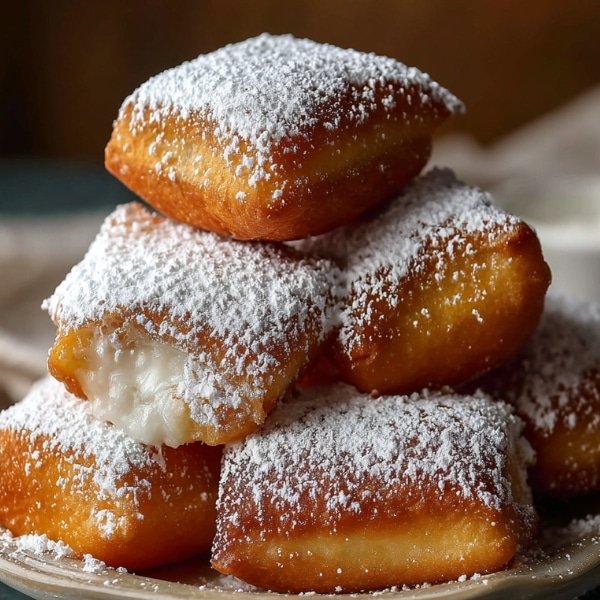
Vanilla French Beignets are one of the most beloved pastries in the world—soft, airy, golden-fried dough dusted generously with powdered sugar. Traditionally associated with French cafés and famously popularized in New Orleans, these pastries strike the perfect balance between lightness and indulgence. What sets this version apart is a fragrant hint of vanilla, which infuses the dough with warm, aromatic sweetness. Whether you’re preparing them for a relaxed weekend breakfast or a festive celebration, these beignets transform any moment into something magical. This guide walks you through everything you need to know to create flawless vanilla beignets—completely from scratch.
Ingredients
1 cup warm milk (105–115°F) – Warm enough to activate yeast but not hot enough to kill it.
1/4 ounce active dry yeast (about 2 1/4 teaspoons) – Helps the dough rise and creates the signature airy texture.
1/4 cup granulated sugar – Adds sweetness and helps feed the yeast.
1 large egg – Provides structure and richness.
1 teaspoon vanilla extract – Infuses the dough with sweet, aromatic flavor.
1/2 teaspoon salt – Balances flavor and strengthens the dough.
1/4 cup unsalted butter, melted – Adds tenderness and rich flavor to the beignets.
3 1/2 to 4 cups all-purpose flour – Start on the lower end and add as needed until the dough becomes soft and manageable.
Vegetable oil, for frying – Any neutral oil works best.
Powdered sugar, for dusting – The classic finish for beignets.
How to Make Vanilla French Beignets
This recipe follows a traditional French-style dough preparation, which gives the beignets their signature light, airy texture.
Step 1: Activate the Yeast
In a large mixing bowl, combine the warm milk, sugar, and yeast. Let the mixture sit for 5–10 minutes, or until it becomes frothy. This indicates that the yeast is active and ready to help your dough rise. If it doesn’t foam, your yeast may be expired, or the milk may have been too hot or too cool.
Step 2: Add Eggs, Butter, and Flavor
Whisk in the egg, vanilla extract, melted butter, and salt until the mixture is smooth. These ingredients enrich the dough and give it the beignets’ characteristic flavor and tenderness.
Step 3: Add Flour Gradually
Begin mixing in the flour, starting with 3 1/2 cups. Use a wooden spoon or a stand mixer with a dough hook attachment. Add flour a little at a time until the dough becomes soft, slightly tacky, and pulls away from the sides of the bowl. You may not need the full 4 cups.
Step 4: Knead the Dough
Turn the dough out onto a lightly floured surface and knead for 5–7 minutes, or until smooth and elastic. Proper kneading helps develop the gluten that gives beignets their tender, stretchy interior.
Step 5: First Rise
Place the dough into a lightly oiled bowl, cover with plastic wrap or a clean towel, and let it rise in a warm place for 1–2 hours, or until doubled in size.
Step 6: Roll and Cut
Once the dough has risen, punch it down to release air. Roll it out on a floured surface to about 1/4-inch thickness. Use a sharp knife or a pizza cutter to cut the dough into squares approximately 2–3 inches wide.
Step 7: Second Rise (Optional but Recommended)
Place the squares on a parchment-lined tray, cover loosely with a towel, and let them rest for 20–30 minutes. This extra rise creates even lighter, fluffier beignets.
Step 8: Fry the Beignets
Heat about 2 inches of vegetable oil in a heavy-bottomed pot to 350°F (175°C). Fry the dough squares in batches, turning once, until golden brown—about 1 minute per side. Avoid overcrowding the pot to maintain oil temperature.
Step 9: Drain and Dust
Transfer the fried beignets to a paper-towel-lined plate to remove excess oil. While still warm, dust generously with powdered sugar. Serve immediately for the best texture and flavor.
Tips for Perfect Vanilla French Beignets
Mind the Dough Texture
The dough should be soft, slightly sticky, and elastic. Too much flour will create dense beignets, so add it gradually.
Keep Your Oil at the Right Temperature
Oil that’s too hot will burn the outside while leaving the center raw; oil that’s too cool will make greasy beignets. Maintain the temperature between 340–360°F for best results.
Don’t Skip the Second Rise
Though optional, the second rise enhances the beignets’ loft and produces an airier texture.
Use Fresh Oil for Best Flavor
Old oil makes pastries taste heavy. Fresh oil ensures a clean, crisp result.
Serve Immediately
Beignets are best eaten warm and fresh; they tend to lose their lightness as they cool.
Variations to Try
Vanilla Bean Beignets
Swap the vanilla extract for the seeds of half a vanilla bean. This adds specks of real vanilla and a more intense aroma.
Cinnamon Sugar Beignets
Instead of powdered sugar, toss warm beignets in a mixture of cinnamon and granulated sugar.
Filled Beignets
Inject the cooled beignets with pastry cream, Nutella, jam, or vanilla custard for a decadent twist.
Lemon Beignets
Add 1 teaspoon of lemon zest to the dough and finish with a light lemon glaze.
Chocolate-Dipped Beignets
Dip half of each beignet in melted chocolate for a café-style presentation.

What to Serve with Beignets
Café au Lait
A classic pairing—half hot coffee, half steamed milk—just like in New Orleans.
Hot Chocolate
A rich mug of cocoa complements the warm, sugary pastry perfectly, especially in winter.
Fresh Fruit
Serve with sliced strawberries, bananas, or berries for a refreshing balance.
Vanilla or Strawberry Sauce
A simple dipping sauce takes these beignets to another level of indulgence.
Why This Recipe Works
This Vanilla French Beignet recipe is rooted in tradition but enhanced with approachable techniques that guarantee success. The yeast dough provides the trademark airiness, while butter and vanilla impart warmth and richness. Proper rising, kneading, and frying technique ensure you get the classic puffed, golden shape every time. Whether you’re a beginner baker or an experienced pastry lover, this method is both forgiving and rewarding, giving you bakery-level results at home.
Cultural & Culinary Background
Beignets trace their origins to French cuisine, where fried dough pastries have been enjoyed for centuries. The word “beignet” itself comes from the Old French “bigne,” meaning a bump or swelling—an apt description of these puffed, airy treats. When French settlers brought the recipe to Louisiana, it evolved into the iconic New Orleans-style beignet served at cafés throughout the French Quarter. These American variations are often square-shaped, extra puffy, and buried under clouds of powdered sugar. Our vanilla-infused version blends Old World elegance with New Orleans charm, making every bite a nod to culinary history.
Storage and Reheating
Storing Leftovers
Beignets taste best fresh, but leftovers can be stored in an airtight container for 1–2 days. Keep them at room temperature to preserve texture.
Reheating
Reheat in a 300°F (150°C) oven for 5–7 minutes to restore crispness. Avoid microwaving—they’ll become tough.
Freezing
Freeze unfried dough squares on a tray, then transfer to a freezer bag. Fry directly from frozen, adding an extra 1–2 minutes per side.
FAQs
Can I bake beignets instead of frying them?
Beignets are traditionally fried, but you can bake them at 375°F (190°C) for 10–12 minutes. They won’t be as airy, but still delicious.
Why didn’t my beignets puff?
Your oil may not have been hot enough, or the dough may not have risen properly.
Can I make the dough ahead?
Yes, refrigerate the dough overnight and let it come to room temperature before rolling.
Can I use instant yeast instead?
Yes—use the same amount, but skip the proofing step and mix it directly into the flour.
Is there a dairy-free version?
Substitute almond milk and plant-based butter. The flavor will change slightly but still be delicious.
Print
Vanilla French Beignets: A Pillowy, Sugary Classic You Can Make at Home
- Total Time: 30 minutes (plus rising time)
- Yield: 20–24 beignets
- Diet: Vegetarian
Description
These Vanilla French Beignets are soft, pillowy, lightly sweetened fried pastries dusted generously with powdered sugar. Perfect for a café-style breakfast or dessert.
Ingredients
- 1 cup warm milk (105–115°F)
- 1/4 ounce active dry yeast (about 2 1/4 teaspoons)
- 1/4 cup granulated sugar
- 1 large egg
- 1 teaspoon vanilla extract
- 1/2 teaspoon salt
- 1/4 cup unsalted butter, melted
- 3 1/2 to 4 cups all-purpose flour
- Vegetable oil, for frying
- Powdered sugar, for dusting
Instructions
- In a bowl, combine warm milk, yeast, and sugar. Let sit for 5–10 minutes until foamy.
- Whisk in the egg, vanilla extract, salt, and melted butter.
- Gradually add flour, mixing until a soft dough forms. Knead for 4–5 minutes until smooth and elastic.
- Place dough in a lightly oiled bowl, cover, and let rise for 1–2 hours or until doubled in size.
- Punch down dough and roll it out to about 1/4-inch thickness. Cut into squares or desired shapes.
- Heat oil to 350°F (175°C) and fry beignets in batches until golden, about 1 minute per side.
- Drain on paper towels and dust generously with powdered sugar. Serve warm.
Notes
- For extra flavor, add a pinch of nutmeg to the dough.
- Serve immediately for best texture.
- Prep Time: 15 minutes
- Cook Time: 15 minutes
- Category: Breakfast, Dessert
- Method: Fry
- Cuisine: French
Conclusion
Vanilla French Beignets are a celebration of everything wonderful about pastry—warm, airy, sweet, and lightly crisp. They’re surprisingly approachable to make at home and deliver incredible bakery-quality results. Whether you’re embracing French tradition or channeling New Orleans flair, these beignets bring joy to any morning or dessert table. With their fragrant vanilla aroma and pillowy texture, they’re sure to become a beloved recipe in your kitchen. If you’d like, I can also create a printable card or write a café-style menu description for these beignets!