

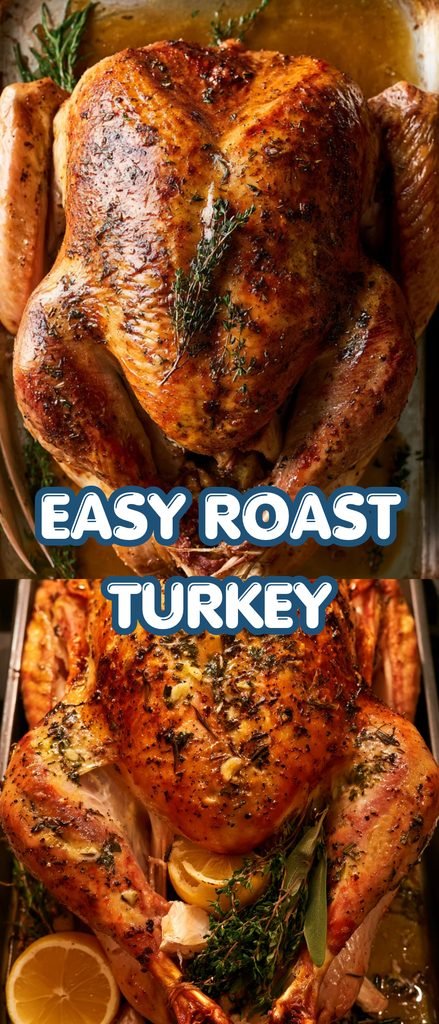
Nothing brings family and friends together quite like a beautifully roasted turkey! This Easy Roast Turkey recipe delivers tender, juicy meat with golden, flavorful skin thanks to a delicious homemade garlic herb butter. Fresh sage, thyme, rosemary, and garlic infuse the turkey with wonderful savory flavor, while lemon and fresh herbs tucked inside the cavity add an extra layer of aroma.
Whether you’re preparing Thanksgiving dinner, hosting Christmas, or celebrating a special family occasion, this roast turkey makes an impressive centerpiece without complicated techniques. The preparation is straightforward, and there’s no need for constant basting. Simply prepare the herb butter, season the bird, and let the oven do the work.
With a few helpful tips and an instant-read thermometer, you can serve a gorgeous, flavorful turkey that everyone will look forward to enjoying!
Why You’ll Love This Easy Roast Turkey
- Juicy, tender meat: A flavorful herb butter helps keep the turkey moist while adding richness to every bite.
- Beautiful golden skin: Starting the oven at a high temperature before reducing the heat helps develop an appetizing roasted exterior.
- Fresh garlic and herbs: Sage, thyme, rosemary, and garlic create a classic savory flavor that’s perfect for holiday meals.
- No constant basting: This recipe keeps things simple without requiring you to repeatedly open the oven.
- Perfect for special occasions: It’s an impressive main dish for Thanksgiving, Christmas, and family celebrations.
- Easy to customize: Adjust the herbs and butter seasoning to suit your taste and the size of your turkey.
Ingredients You’ll Need
This recipe uses simple ingredients to create a flavorful turkey with a delicious garlic herb butter.
For the Turkey
- Whole turkey: You’ll need one 14–16-pound turkey, fully thawed if frozen. Remove the giblets and neck before roasting.
- Salt and black pepper: Season the turkey inside and out to bring out its natural flavor. Use kosher or sea salt when possible.
For the Garlic Herb Butter
- Unsalted butter: One cup (two sticks), softened, forms the rich base of the herb mixture and helps the seasonings coat the turkey.
- Fresh sage: One tablespoon of finely chopped sage adds an earthy, classic holiday flavor.
- Fresh thyme: One tablespoon contributes a delicate herbal aroma.
- Fresh rosemary: One tablespoon adds a fragrant, woodsy flavor that pairs beautifully with roasted poultry.
- Garlic: Four minced cloves bring savory depth to the butter.
- Salt: One teaspoon seasons the herb butter.
- Black pepper: Half a teaspoon, or to taste, adds a gentle peppery kick.
For Stuffing the Turkey Cavity
- Lemon: One lemon, halved, adds a fresh citrus aroma as the turkey roasts.
- Fresh herb sprigs: A few sprigs each of sage, thyme, and rosemary reinforce the herb flavor.
- Garlic: One whole head, separated into peeled cloves, adds another layer of savory aroma.


How to Make Easy Roast Turkey
Roasting a whole turkey may seem intimidating, but this method breaks the process into manageable steps. The most important things are preparing the turkey properly, using a thermometer, and allowing enough resting time before carving.
Step 1: Bring the Turkey and Butter to Room Temperature
Remove the turkey from the refrigerator about 1 hour before roasting. Place it on a baking sheet to catch any liquid that may escape when you open the packaging.
Take the butter out of the refrigerator as well so it has time to soften. Soft butter is much easier to combine with the fresh herbs and spread over the turkey.
Step 2: Prepare the Garlic Herb Butter
Add the softened butter to a mixing bowl.
Stir in the chopped sage, thyme, rosemary, minced garlic, salt, and black pepper. Mash everything together with a fork until the herbs and seasonings are evenly distributed.
Set the herb butter aside while you prepare the turkey.
Step 3: Preheat the Oven
Preheat your oven to 450°F (232°C).
Position an oven rack in the bottom third of the oven and remove any additional racks that might get in the way. Make sure there’s enough space for the roasting pan and turkey.
Step 4: Prepare the Turkey
Remove the turkey from its packaging. Check inside the cavity for the giblets and neck, removing them if included.
Drain any excess liquid from the cavity, then pat the entire turkey dry with paper towels. Dry skin helps the butter adhere and encourages better browning.
Season the turkey inside and out with salt and pepper. Since the herb butter already contains salt, use a light hand with additional seasoning. The original recipe suggests approximately 1 teaspoon of salt in total for the cavity and exterior.
Stuff the cavity with the halved lemon, fresh sage, thyme, rosemary, and peeled garlic cloves.
Rub the garlic herb butter generously over the turkey, coating the skin evenly. The original method leaves the very bottom of the bird unbuttered.
Tuck the wings underneath the turkey. You can also tie the legs together with kitchen twine for a neater presentation, although this step is optional.
Step 5: Roast the Turkey
Place the turkey breast-side up on the rack of a roasting pan.
Transfer the pan to the preheated oven and immediately reduce the temperature to 350°F (175°C).
Roast for approximately 3 hours for a 14-pound turkey, adjusting the cooking time according to the actual weight of your bird.
The general timing guideline is approximately 13 minutes per pound at 350°F. However, cooking time is only an estimate, so always check the internal temperature with an instant-read meat thermometer.
Insert the thermometer into the thickest part of the thigh without touching the bone. The turkey is ready when it reaches 165°F (74°C).
Begin checking for doneness about 30 minutes before the estimated cooking time is complete.
Important: The turkey skin may brown before the meat is fully cooked. If it becomes sufficiently golden or starts getting too dark, loosely cover the turkey with nonstick foil for the remainder of the roasting time. This helps prevent the breast skin from burning.
There’s no need to baste the turkey during roasting.
Step 6: Rest the Turkey
Once the turkey reaches the correct internal temperature, carefully remove the roasting pan from the oven.
Tilt the roasting rack carefully so the juices inside the turkey drain into the bottom of the pan. Save these flavorful drippings if you’d like to make homemade gravy.
Transfer the turkey, still on its rack, to a large cutting board or serving plate.
Let it rest for at least 20 minutes before carving. Resting allows the juices to redistribute throughout the meat, helping keep each slice moist and tender.
Step 7: Carve and Serve
After resting, carve the turkey into slices and arrange them on a serving platter.
Serve with your favorite holiday sides, and don’t forget to save the pan drippings for a delicious homemade gravy!
Tips for Success
- Thaw the turkey completely: If starting with a frozen turkey, thaw it safely in the refrigerator before roasting. A partially frozen bird won’t cook evenly.
- Use softened butter: Cold butter is difficult to spread evenly, so allow it to soften before preparing the herb mixture.
- Pat the turkey dry: Removing excess moisture helps the herb butter stick and encourages the skin to brown.
- Don’t over-season a brined turkey: If your turkey is already brined or pre-salted, reduce or omit the additional salt in the butter and on the bird.
- Use an instant-read thermometer: This is the most reliable way to determine when the turkey is cooked. Don’t rely on appearance or cooking time alone.
- Protect the breast from over-browning: Loosely tent the turkey with nonstick foil if the skin gets dark before the meat is ready.
- Avoid opening the oven unnecessarily: Every time you open the door, heat escapes and the cooking time may increase.
- Let it rest before carving: Don’t skip the resting period. Allowing the turkey to rest for at least 20 minutes helps preserve its juices.
- Save the drippings: The flavorful liquid in the roasting pan is perfect for making homemade turkey gravy.
Equipment Needed
- Large roasting pan with a rack
- Instant-read meat thermometer
- Baking sheet
- Mixing bowl
- Fork or small spatula
- Paper towels
- Kitchen twine (optional)
- Nonstick aluminum foil
- Large cutting board
- Sharp carving knife
Recipe Variations
You can easily customize the herb butter to create a different flavor profile while keeping the same basic roasting method.
Lemon Garlic Herb Turkey
Add a little lemon zest to the softened butter for a brighter citrus flavor. You can also add extra lemon halves to the turkey cavity.
Sage Butter Roast Turkey
For a more pronounced traditional holiday flavor, increase the amount of fresh sage in the herb butter and use extra sage sprigs inside the cavity.
Rosemary Garlic Turkey
Give rosemary the starring role by adding extra finely chopped rosemary to the butter. Its fragrant, woodsy flavor pairs beautifully with garlic and roasted poultry.
Paprika Herb Butter Turkey
Mix a little paprika into the herb butter for an extra savory flavor and a deeper golden color on the skin.
Citrus Herb Turkey
Use orange halves instead of lemon, or combine both citrus fruits with the fresh herbs inside the cavity. This gives the turkey a slightly sweeter, fragrant aroma.
What to Serve With Roast Turkey
A beautifully roasted turkey deserves a delicious spread of side dishes! Whether you’re planning Thanksgiving dinner or a Christmas feast, these favorites make wonderful additions.
Classic holiday sides:
- Rosemary garlic mashed potatoes
- Roasted garlic butter Parmesan potatoes
- Classic homemade stuffing
- Green bean casserole
- Creamy mac and cheese
- Sweet potato casserole
Fresh and lighter sides:
- Roasted Brussels sprouts
- Honey-glazed carrots
- Cranberry sauce
- Fresh green salad
- Roasted seasonal vegetables
Sauces and extras:
- Homemade turkey gravy made with the pan drippings
- Cranberry sauce
- Garlic herb butter
- Dinner rolls or biscuits
Make-Ahead and Storage Tips
Make ahead: You can prepare the garlic herb butter a day or two in advance and store it covered in the refrigerator. Allow it to soften before rubbing it over the turkey. You can also prepare your herbs, lemon, and garlic ahead of time. For the best results, roast the turkey on the day you plan to serve it.
Refrigerator: Remove leftover turkey meat from the bones and refrigerate it in airtight containers within 2 hours of cooking. Store for up to 3–4 days.
Freezing: Freeze leftover turkey in airtight freezer-safe containers or bags for up to 3 months for best quality. Divide it into meal-sized portions for easier thawing.
Reheating: Place sliced turkey in an oven-safe dish with a little broth or leftover gravy. Cover with foil and warm in a 325°F oven until heated to 165°F. This helps prevent the meat from drying out.
Using leftovers: Add leftover turkey to sandwiches, soups, casseroles, pot pies, or salads for easy meals throughout the week.
Frequently Asked Questions
How long does it take to roast a 14-pound turkey?
This recipe estimates approximately 3 hours for a 14-pound turkey at 350°F after the initial oven preheat. The general guideline is about 13 minutes per pound, but actual cooking time can vary. Always use an instant-read thermometer to check for an internal temperature of 165°F in the thickest part of the thigh.
Should I cover the turkey while roasting?
No, not initially. Roast the turkey uncovered so the skin can develop a beautiful golden color. If the skin becomes too dark before the turkey is cooked through, loosely cover it with nonstick foil for the remaining cooking time.
Do I need to baste the turkey?
No. This recipe doesn’t require basting. The garlic herb butter provides plenty of flavor, and leaving the oven door closed helps maintain a consistent cooking temperature.
Should I put butter under the turkey skin?
This recipe rubs the herb butter over the outside of the turkey rather than underneath the skin. That keeps the preparation simple while still giving the skin plenty of flavor.
What temperature should roast turkey reach?
The turkey should reach 165°F (74°C) in the thickest part of the thigh, measured with an instant-read thermometer without touching the bone. Check other thick areas as well to confirm the bird is safely cooked.
Can I use dried herbs instead of fresh herbs?
Fresh herbs are recommended for their bright flavor and aroma. However, dried herbs can be used if needed. Since dried herbs are more concentrated, use less than the amount of fresh herbs called for and adjust to taste.
Can I roast a turkey smaller or larger than 14–16 pounds?
Yes. The recipe can be adjusted for different turkey sizes. You may need to use slightly less or more herb butter and cavity fillings depending on the size of the bird. Use the approximate 13-minutes-per-pound guideline as a starting point, but rely on the thermometer rather than time alone.
Why is resting the turkey so important?
Resting gives the juices time to redistribute after roasting. If you carve the turkey immediately, more of those juices can run onto the cutting board, leaving the meat drier. Allow at least 20 minutes of resting time before carving.
Final Thoughts
This Easy Roast Turkey is a wonderful centerpiece for Thanksgiving, Christmas, or any special gathering. With juicy meat, golden skin, and a flavorful garlic herb butter made with fresh sage, thyme, rosemary, and garlic, it’s a classic holiday main dish that never disappoints.
The best part? You don’t need complicated techniques or constant basting to make a delicious turkey. Prepare the herb butter, season the bird, roast it until it reaches the proper temperature, and give it time to rest before carving.
Serve it with your favorite holiday sides and homemade gravy for a memorable meal everyone will love!
If you make this recipe, leave a star rating and comment to share how it turned out!
Print
Easy Roast Turkey
- Total Time: 3 hours 30 minutes
- Yield: 10 servings
Description
This Easy Roast Turkey is tender, juicy, and simple to prepare with flavorful garlic herb butter rubbed over the skin. Stuffed with lemon, fresh herbs, and garlic, it’s a delicious centerpiece for Thanksgiving, Christmas, or any special occasion.
Ingredients
- 1 whole turkey (14–16 pounds)
- Salt and pepper, to taste
For the Herb Butter
- 1 cup unsalted butter (2 sticks), softened
- 1 tablespoon fresh sage, finely chopped
- 1 tablespoon fresh thyme, finely chopped
- 1 tablespoon fresh rosemary, finely chopped
- 4 cloves garlic, minced
- 1 teaspoon salt
- 1/2 teaspoon pepper, or to taste
For Inside the Turkey
- 1 lemon, halved
- A few sprigs each of fresh sage, thyme, and rosemary
- 1 head garlic, broken into cloves and peeled
Instructions
- Take the turkey out of the refrigerator and let it sit for 1 hour before roasting. Place it on a baking sheet to collect any spills when opening the packaging. Remove the butter from the refrigerator so it can soften.
- Add the softened butter, chopped sage, thyme, rosemary, minced garlic, salt, and pepper to a bowl. Mash together with a fork until combined.
- Preheat the oven to 450°F and move a rack to the bottom third of the oven. Remove the other racks to make room for the turkey.
- Remove the turkey from its packaging. Take out the giblets and neck if included inside the cavity. Drain as much liquid as possible from the cavity and return the turkey to the baking sheet.
- Pat the turkey dry with paper towels. Season with salt and pepper, including inside the cavity. Add about 1 teaspoon of salt in total, since the herb butter also contains salt.
- Stuff the cavity with the lemon halves, fresh herb sprigs, and garlic cloves. Rub the herb butter all over the turkey, avoiding the very bottom. Tuck the wings underneath and tie the legs together with kitchen twine if desired.
- Place the turkey breast-side up on the rack of a roasting pan.
- Place the roasting pan in the oven and immediately reduce the temperature to 350°F.
- Roast for about 3 hours for a 14-pound turkey, or until an instant-read thermometer inserted into the thickest part of the thigh reads 165°F. Begin checking for doneness 30 minutes before the expected cooking time is reached. If the skin browns before the turkey is cooked, loosely cover it with non-stick foil for the remainder of the roasting time. There is no need to baste.
- Once cooked, carefully tilt the roasting rack so the juices inside the turkey drain into the bottom of the pan. Transfer the turkey on its rack to a large cutting board or plate.
- Let the turkey rest for 20 minutes before carving so the juices can redistribute. Use the pan drippings to make gravy if desired.
Notes
- For a turkey outside the 14–16 pound range, adjust the amount of herb butter and cavity fillings as needed.
- The general roasting guideline is 13 minutes per pound at 350°F. Cooking time may vary depending on turkey size and how often the oven is opened.
- Use an instant-read thermometer to check doneness. The thickest part of the thigh should reach 165°F before resting.
- Use sea salt or kosher salt if possible.
- Do not add salt to an already brined turkey. Reduce or omit the salt in the herb butter if using a brined turkey.
- Loosely cover the turkey with non-stick foil if the skin browns before the meat is fully cooked.
- Allow the turkey to rest for 20 minutes before carving.
- Pan drippings can be used to make gravy.
- Prep Time: 30 minutes
- Cook Time: 3 hours
- Category: Main Course
- Method: Roasting
- Cuisine: American